
Home Water Softener Systems
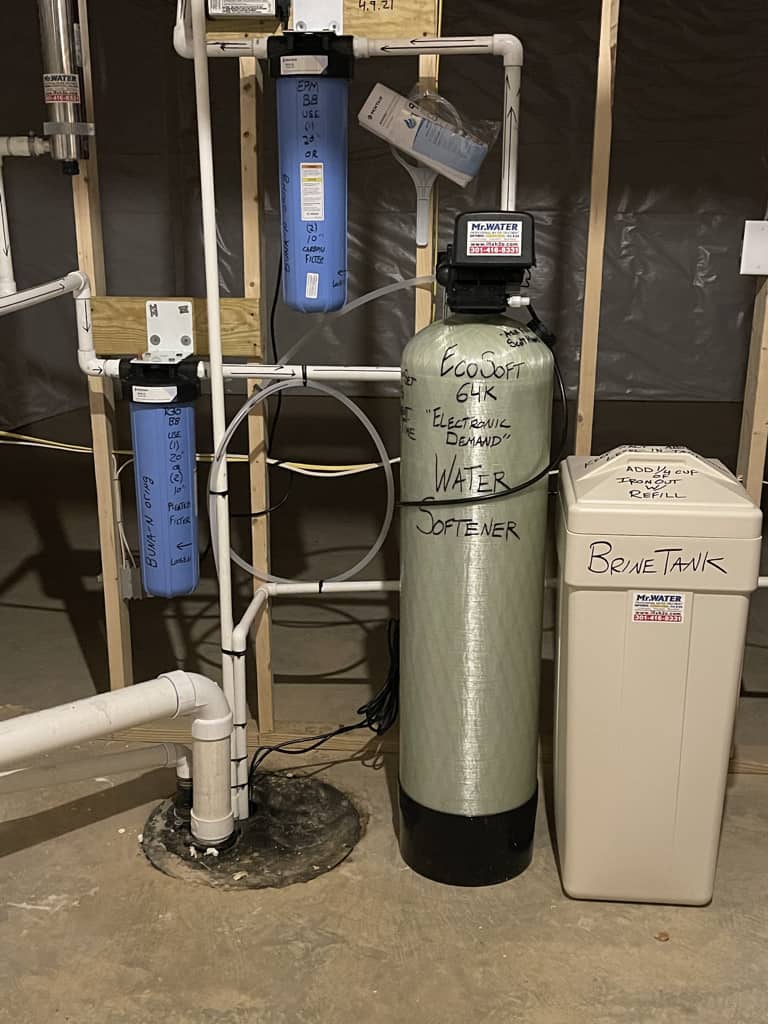
The water softening systems our company designs and builds solve hard water, iron, and manganese problems — and with the proper filters installed, they also remove sediment and chlorine from your water. We build these heavy-duty water softeners from the finest components available and install them the right way, giving you a reliable system with minimal maintenance requirements.
We offer water softener systems for homes and businesses, on both well and municipal water. With simple filter changes and the occasional bag of water softener salt, you and your family will enjoy soft water for showering, bathing, and laundry for decades to come. Our water softener installation, service, and repair are available throughout Maryland, the West Virginia Panhandle, Northern Virginia, and Southern Pennsylvania.
A water softener system is a whole-house plumbing appliance that removes the minerals that make water "hard" — primarily calcium, along with iron, manganese, and other positively charged ions. Left untreated, hard water causes limescale buildup in pipes and water heaters, orange and white staining on fixtures, stiff laundry, and shortened appliance life. It's one of the most common water problems we diagnose and fix across Maryland, West Virginia, Virginia, and Pennsylvania.
Water softeners work through a process called cation exchange. Inside the softener is a tank filled with resin beads charged with sodium ions. As hard water passes through the resin bed, calcium and magnesium ions swap places with the sodium — the hardness minerals stay behind on the resin, and softened water flows on to your home. The resin then recharges itself periodically using the salt in your brine tank.
A water softener is not the same thing as a water filter. Softeners remove hardness minerals through ion exchange; filters remove contaminants like sediment, chlorine, and chemicals through physical or chemical filtration. Many homes need both — and proper water softener installation pairs the right pre-filter with the softener.
On a private well, professional installation includes a properly sized sediment filter between the well tank and the resin tank. Without it, sand and silt accumulate inside the softener and cause leaks, stuck internal components, and pressure problems — one of the most common failures we see when we're called to repair softeners installed by others.
On municipal water, installation should include a carbon pre-filter. It removes chlorine taste and odor, and it protects the softening resin — chlorine steadily destroys resin, and without carbon pre-filtration a softener can fail years ahead of schedule. Skipping this filter is the most common shortcut taken by big-box installations.
A properly sized, properly installed water softener protects your plumbing and appliances, makes bathing and laundry noticeably better, and runs for decades with nothing more than salt refills and routine filter changes.
The best water softener system isn't a brand — it's the system correctly sized and built for your water chemistry, your household's water usage, and whether you're on well or city water. After 38 years of installing and repairing softeners across Maryland, West Virginia, Virginia, and Pennsylvania, here's what actually matters when you compare systems:
A softener's capacity must match your hardness level (measured in grains per gallon) and how much water your family uses. An undersized softener regenerates constantly, wasting salt and wearing out early; an oversized one wastes money up front. This is why we test your water first and size the system to the results — not sell you whatever's on the truck.
The amount of resin in the tank determines how much hardness the system can remove between regenerations. More resin means longer intervals between cycles and less salt used over time. We build with a full cubic foot or more of quality cation exchange resin — many big-box units cut costs here, and it shows in performance.
Cabinet-style softeners hide the resin tank inside the brine tank to save space. They're fine for tight spots on city water, but separate-tank systems are easier to service and last longer — especially on well water, where equipment works harder.
The control valve is the heart of the softener and the part that fails first on cheap units. Basic time-clock valves regenerate on a fixed schedule whether you used water or not, wasting salt and water. We install proven and always-serviceable Autotrol Performa Easy iQ control valves — the same valve brand we've been using since we started the business 22 years ago.
Modern metered control valves regenerate based on the water you actually use, not a timer. The result is less salt, less wastewater, and a longer system life. Every system we install is metered and programmed to your household's real usage.
Softeners from home improvement stores are built to a price, not to a water condition. They struggle with well water, and when they fail, replacement parts are often unavailable — we know, because we're frequently called to replace them. A professionally built system from commercial-grade components costs more up front and dramatically less over its lifetime.
So-called "salt-free" or "no-salt" water softeners are not water softeners at all. They do not remove calcium, magnesium, or iron from your water — and removing those hardness minerals is the definition of softening. Template-assisted crystallization (TAC) and other "conditioner" gadgets claim to alter scale behavior, but there is no independent, peer-reviewed evidence that they remove hardness, and the hard minerals remain in your water either way.
If a salt-free system were a real alternative, we'd install them — it would be an easy sell. We don't, because they don't work. Cation exchange water softening has been proven over 85+ years of use and remains the only method any home or business owner should trust to actually soften water. If someone is quoting you a "saltless softener," get a second opinion before you spend the money — we offer honest water testing and will tell you exactly what your water does and doesn't need.

Mr. Water LLC is a one-man operation — send a few photos and describe your water problem through the contact form, and with 38 years of experience Scott can usually tell you what you need before he ever comes out.
Send Photos & Get a Straight Answer